White Metal Bearing Alloys (Babbitt Metal) - Lead and Tin Based |
 |
|
|
| |
 |
 |
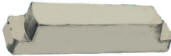 |
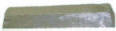
| Bar Shape |
Ingot |
Margash |
Pig |
| Dimensions |
10-3/4" x 2" x 1-1/4"
(L x W x H) |
26" x 2" x 1-1/2"
(L x W x H) |
17-1/2" x 4" x 3-1/2"
(L x W x H) |
| Pure Lead |
10 LB |
25 LB |
55 LB |
| Pure Tin |
6-1/2 LB |
16 LB |
35 LB |
|
Tin Based Alloys |
Lead Based Alloys |
| |
|
| Marine 11D |
SNSB5CU4 |
| No. 1 (ASTM #1) |
SNSB4.5CU4.5 |
| Marine 11R |
SNSB7.75CU2.75 |
| Nickel Genuine (ASTM #2) |
SNSB7.5CU3.5 |
| Marine 11 |
SNSB5.75CU5.25 |
| Diesel Special |
SNSB6.75CU5.5 |
| No. 11 (ASTM #11) |
SNSB6.75CU5.75 |
| SAE 11 |
SNSB7.5CU6.5 |
| Imperial Genuine |
SNSB7CU7 |
| Turbine |
SNSB7CU8 |
| Royal Amature |
SNSB8.25CU8 |
| Super Tough (ASTM #3) |
SNSB8CU8 |
|
| No. 13 (ASTM #13) |
PBSN6SB10 |
| Mill Anchor |
PBSN5SB12 |
| Durite (ASTM #15) |
PBSN1SB16 |
| Star |
PBN5.25SB14 |
| Silvertone |
PBSN2SB18 |
| Royal (ASTM #8) |
PBSN5SB15 |
| Heavy Pressure (ASTM #7) |
PBSN10SB15 |
| Special Sawguide |
PBSN10SB19 |
|
| |
Tin Based Alloys - Chemical Composition (%) Chart |
| INDUSTRY NAME |
ASTM B23 |
Sn
(Tin) |
Sb
(Antimony) |
Cu
(Copper) |
Pb
(Lead) |
| Marine 11 D |
- |
90.0 - 92.0 |
4.5 - 5.5 |
3.5 - 4.5 |
0.35 (Max) |
| No. 1 |
Grade 1 |
90.0 - 92.0 |
4.0 - 5.0 |
4.0 - 5.0 |
0.35 (Max) |
| Marine 11R |
- |
89.0 - 89.5 |
7.5 - 8.5 |
2.5 - 3.0 |
0.35 (Max) |
| Nickel Genuine |
Grade 2 |
88.0 - 90.0 |
7.0 - 8.0 |
3.0 - 4.0 |
0.35 (Max) |
| Marine 11 |
- |
88.0 - 90.0 |
5.5 - 6.0 |
5.0 - 5.5 |
0.35 (Max) |
| 4X Royal Nickel Genuine |
- |
87.5 - 89.5 |
7.25 - 7.75 |
3.25 - 3.75 |
0.35 (Max) |
| Diesel Special |
- |
87.5 - 88.0 |
6.5 - 7.0 |
5.0 - 6.0 |
0.35 (Max) |
| No. 11 |
Grade 11 |
86.0 - 89.0 |
6.0 - 7.5 |
5.0 - 6.5 |
0.35 (Max) |
| SAE 11 |
- |
85.0 - 87.0 |
7.0 - 8.0 |
6.0 - 7.0 |
0.35 (Max) |
| Imperial Genuine |
- |
85.0 - 87.0 |
6.5 - 7.5 |
6.5 - 7.5 |
0.35 (Max) |
| Turbine |
- |
84.0 - 86.0 |
6.5 - 7.5 |
7.5 - 8.5 |
0.35 (Max) |
| Royal Armature |
- |
83.5 - 84.0 |
8.0 - 8.5 |
7.5 - 8.5 |
0.35 (Max) |
| Super Tough |
Grade 3 |
83.0 - 85.0 |
7.5 - 8.5 |
7.5 - 8.5 |
0.35 (Max) |
|
Maximum Allowable Impurities: Fe=0.08, As=0.10, Bi=0.08, Zn=0.005, Al=0.005, Cd=0.05
|
| |
Lead Based Alloys - Chemical Composition (%) Chart |
| INDUSTRY NAME |
ASTM B23 |
Sn
(Tin) |
Sb
(Antimony) |
Pb
(Lead) |
As
(Arsenic) |
| No. 13 |
Grade 13 |
5.5 - 6.5 |
9.5 - 10.5 |
Balance |
0.25 (Max) |
| Mill Anchor |
- |
4.0 - 6.0 |
11.5 - 12.5 |
Balance |
0.25 (Max) |
| Durite |
Grade 15 |
0.8 - 1.2 |
14.5 - 17.5 |
Balance |
0.8 - 1.4 |
| Star |
- |
5.0 - 5.5 |
13.5 - 14.5 |
Balance |
0.30 - 0.60 |
| Silverstone |
- |
1.0 - 3.0 |
17.5 - 18.5 |
Balance |
0.25 (Max) |
| Royal |
Grade 8 |
4.5 - 5.5 |
14.0 - 16.0 |
Balance |
0.30 - 0.60 |
| Heavy Pressure |
Grade 7 |
9.3 - 10.7 |
14.0 - 16.0 |
Balance |
0.30 - 0.60 |
| Special Sawguide |
- |
9.0 - 11.0 |
18.5 - 19.5 |
Balance |
0.25 (Max) |
|
Maximum Allowable Impurities: Cu=0.50, Fe=0.10, Bi=0.10, Zn=0.005, Al=0.005, Cd=0.05
|
| |
In selecting the proper type of Babbitt for a particular job there are a number of
factors to take into consideration, the most import of which
are as follows:
1. Surface speed of the SHAFT
2. Load bearing is required to carry
Secondly, but no less important, the following points must also be taken into account:
| A. Continuity of service |
D. Lubrication |
| B. Bonding possibilities |
E. Cleanliness |
| C. Cooling facilities |
F. Attention given to the bearings in question |
There is no doubt that if a bearing be highly loaded in relation to its size, a high tin alloy is desirable; whereas for much slower speed work and
less heavily loaded bearings, a lead-base one may be employed, and is far more economical.
1. Surface speed of the shaft: (The number of feet traveled per minute by the shaft circumferentially.)
|
| |
|
|
Pi = 3.1416 |
|
Formula:
|
Pi x D x RPM |
= S |
D = Diameter of Shaft |
| |
12 |
RPM = Revolutions Per Minute |
| |
|
|
S = Surface speed of the Shaft |
| |
|
|
|
Example:
|
Determine the surface of a 2 inch diameter shaft going 1,400 RPM |
| |
Pi x D x RPM |
= 3.1416 x 2 x 1,400 = 733.04 Ft/min
|
| |
12 |
12 |
|
| |
| 2. Load Bearing is required to carry: (The weight which is being exerted through the combined weights
of the shaft and any other direct weights on the shaft and measured in pounds per square inch.) |
| |
|
|
|
| |
|
|
W = Total weight carried by bearing |
|
Formula:
|
___W___
|
= L |
I.D = Inside diameter of bearing |
| |
I.D x L.O.B.
|
L = Load bearing required to carry |
| |
|
|
L.O.B = Length of Bearing |
| |
|
|
Example:
|
Determine the load on a bearing of a 2 inch I.D bearing,
5 inches long and carrying a weight of 3,100 lbs |
| |
_____W_____
|
= 3,100 = 310 Lbs/sq.in |
| |
I.D x L.O.B.
|
2 x 5
|
|
| |
| There are many formulas for standard grade babbitts but they fall into two main classifications: |
| |
|
Babbitt Classification
|
LIMITS |
Surface Speeds
(# of Ft/min) |
LOAD
(Lbs/sq.in.) |
| MIN. |
MAX. |
MIN. |
MAX. |
| Tin-Based Babbitts |
1,000 |
2,400 |
100 |
2,000 |
| Lead Based Babbitts |
100 |
1,000 |
100 |
500 |
|